
El Paso Local
Rooftop Package Unit Service in El Paso
Repair, maintenance, and installation for rooftop package units across El Paso.
5.0 from 296 Google reviews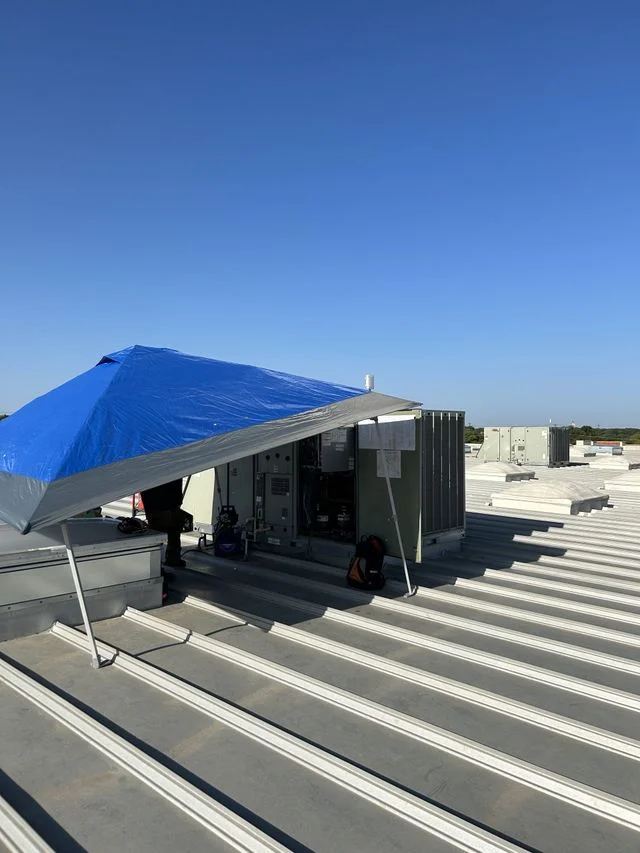
“Texas Summer is the best with prompt and courteous service.”
Request an estimate
Tell us what you need
Overview
El Paso Rooftop Package Unit Experts
Rooftop package unit service in El Paso is what Texas Summer Air & Heat does every week, on flat-roof commercial buildings, older residential stock, and everything in between. A package unit puts the compressor, air handler, and condenser into one cabinet on the roof. That means less square footage lost to mechanical equipment at ground level, but it also means 100-degree desert heat baking the unit from above while it's already working hard to push cool air down into your space. When something goes wrong, call (915) 999-2120 and talk to a real person.
What drives the cost on rooftop work: system tonnage, age of the equipment, refrigerant type, condition of the roof penetrations, and whether the ductwork below needs attention at the same time. Access matters too. A unit on a low commercial roof is a different job than one on a three-story building without a service ladder. David Anchondo holds license TACLB136436E as an Air Conditioning and Refrigeration Contractor in Texas, which covers the full scope of rooftop package unit repair and installation. Every job is different. Contact Texas Summer Air & Heat for an accurate estimate.
Coverage
What rooftop package unit service covers
Diagnostic service calls for units that won't coolwon't startor cycle on and off
Compressorfan motorcontactor replacement on all makes and models
Refrigerant leak detection and recharge
Annual and bi-annual preventive maintenance tuned to El Paso's dust and heat cycle
Full rooftop package unit installation and equipment upgrades
Why it matters
What El Paso's climate does to rooftop equipment
Desert heat, monsoon dust, and high UV exposure are harder on rooftop units than almost any other climate in the country.
Triple-digit heat loading
When ambient air temperature hits 105 and the roof surface is 150 or higher, your package unit's condenser coil is trying to reject heat into air that's already scorching. That drives refrigerant pressures up, stresses the compressor, and shortens the run-to-failure interval if the system isn't sized correctly and maintained on schedule.
Dust and monsoon debris
El Paso's combination of dry west-side dust and monsoon-season blowing sand clogs condenser coils faster than almost anywhere in Texas. A coil that's 20% blocked loses efficiency proportionally. It's not dramatic until the unit stops cooling and you're staring at a service call that could have been avoided with a spring cleaning.
UV and rooftop surface heat
Electrical components, capacitors, and control boards degrade faster under direct UV exposure. Units on dark membrane or tar roofs absorb even more radiant heat from below.
Hard water and coil corrosion
El Paso's water is mineral-heavy. Evaporative cooler runoff, roof drains, and even condensate drainage can leave scale on coil fins over time. Corroded fins don't transfer heat well. We inspect coil condition as part of any comprehensive maintenance visit.
Repair or replace: how to read the numbers
Service you can verify before you call
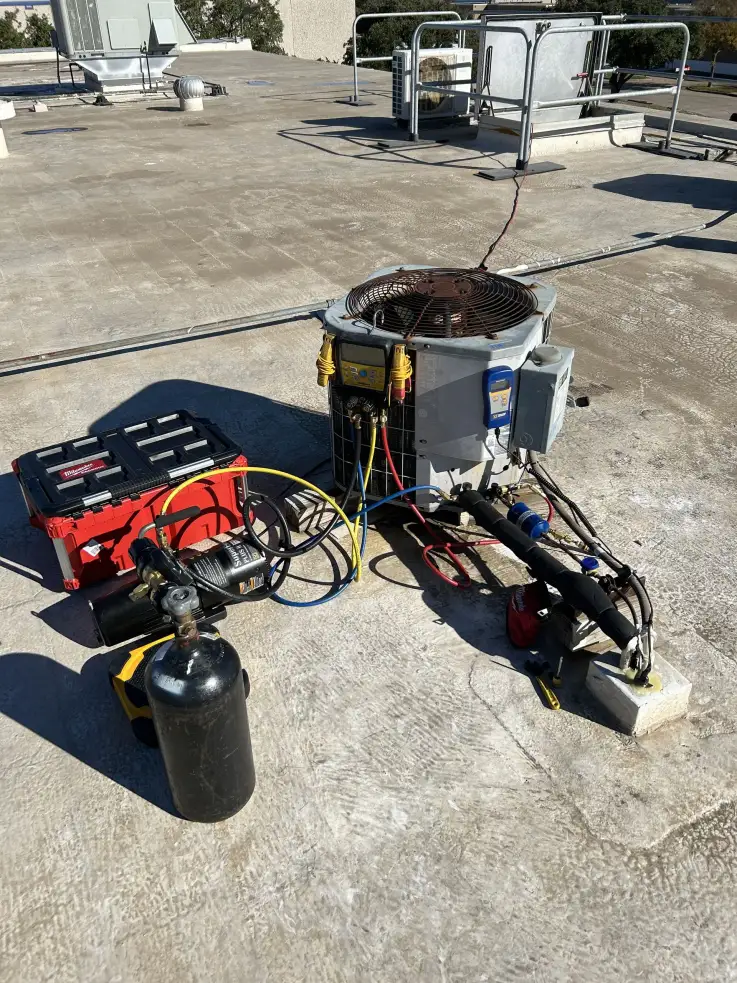
Texas Summer Air & Heat is licensed under TACLB136436E, BBB accredited, and carries 296 five-star Google reviews. David Anchondo is the person who picks up the phone and, most of the time, the person on your roof. That's not a talking point. It's how a 7-year owner-operated business in El Paso actually runs.
Call (915) 999-2120
How it works
What a rooftop service call looks like
Call and describe the problem
You reach a real person at (915) 999-2120. Describe what the unit is doing or not doing. We'll give you a straight read on urgency and get an appointment scheduled.
On-roof diagnostic
We check refrigerant pressures, electrical components, fan operation, coil condition, and filter status. You get a plain-English explanation of what we found and what it takes to fix it.
Repair, maintenance, or install
If it's a repair, we do it right. If it's a maintenance visit, we leave the system cleaner and more efficient than we found it. If the unit's beyond saving, we'll walk you through replacement options with equipment upgrade guidance built in.
Rooftop package unit vs. split system: which one do you have?
Package units are common on commercial buildings and older El Paso homes. Here's how to tell the difference and why it matters for service.
Package unit: everything on the roof
One cabinet contains the compressor, condenser, and evaporator coil. Ducts run straight down through the roof into the building. You'll see one large unit on the roof and no outdoor condenser on the ground. Common on flat-roof commercial spaces, retail buildings, and some older single-story homes around El Paso's Five Points and older east-side neighborhoods.
Split system: two separate units
An outdoor condenser sits at ground level and connects via refrigerant lines to an indoor air handler. If you have a condenser on a concrete pad outside, that's a split system. We service split systems too, but the access, tools, and service approach differ meaningfully from rooftop work.
Why it matters for service
A package unit on a commercial roof needs roof-access safety practices, different recovery equipment, and a technician who regularly works at height. Not every HVAC crew does rooftop work comfortably. David and the Texas Summer team work rooftop equipment regularly. It's on the list of what we service, not a footnote.
How often should your rooftop unit be serviced?
In the field
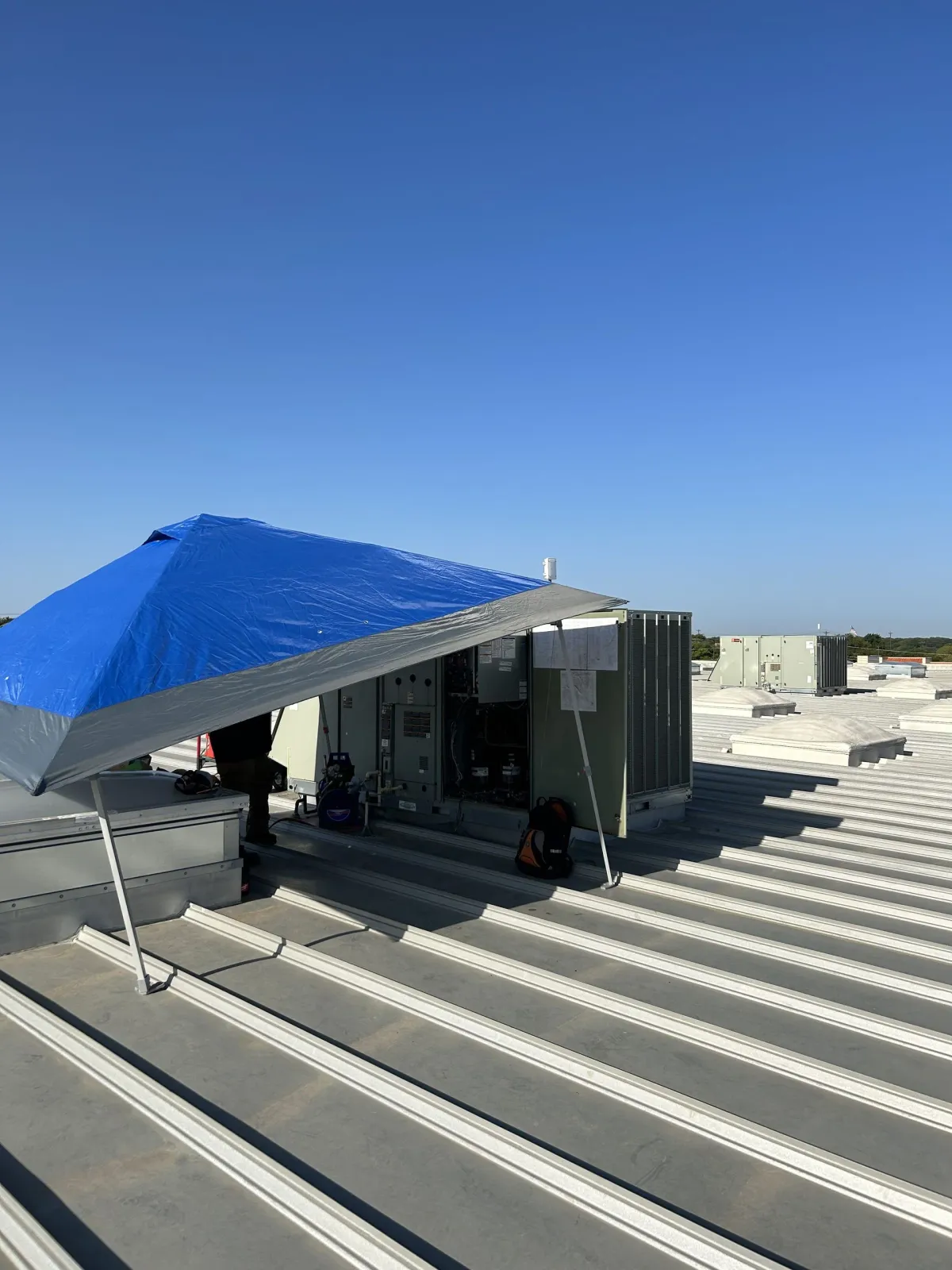
A look at our work
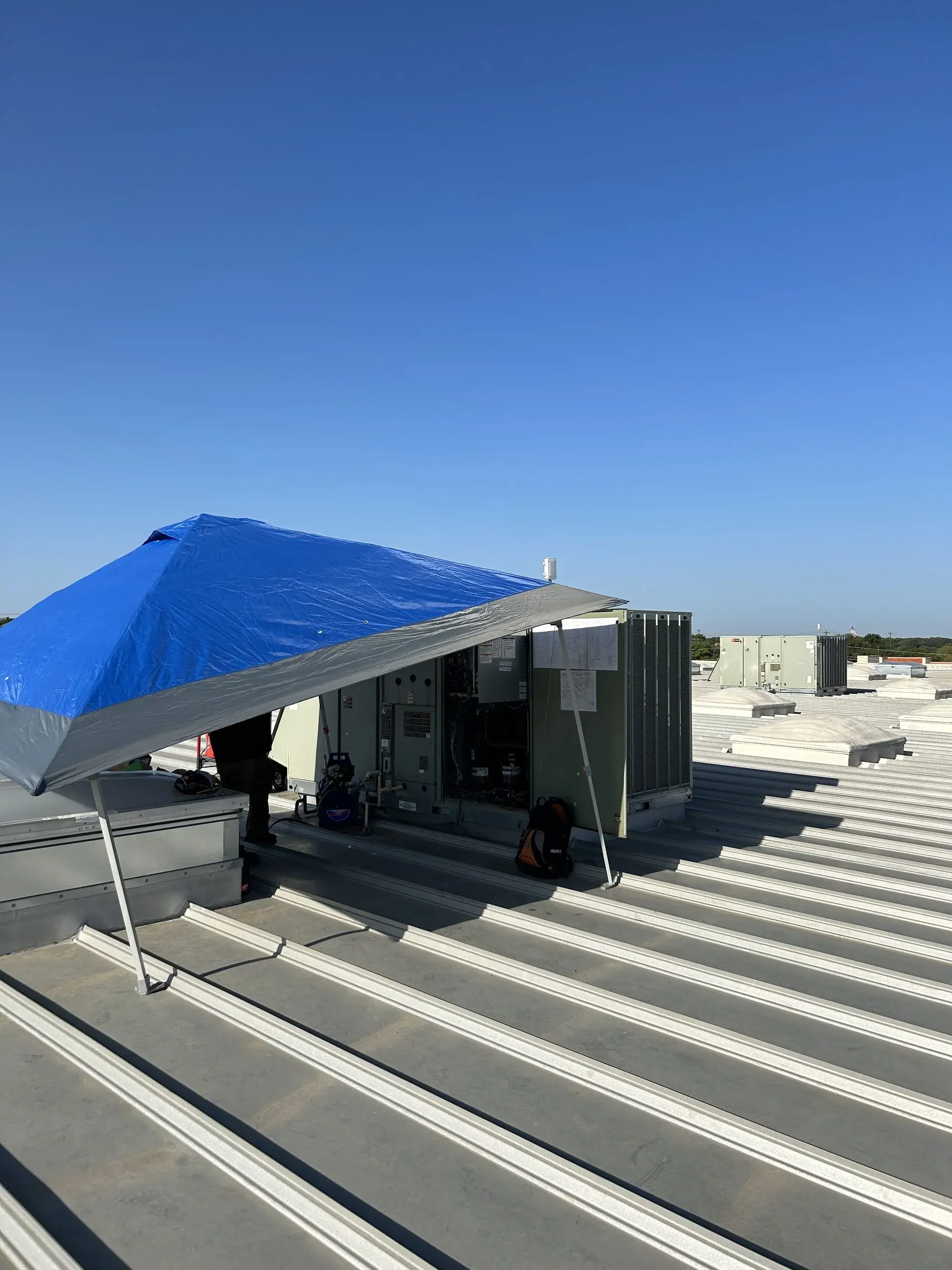
Rooftop unit issues don't get better in July
Call before it fails completely.
Frequently asked questions
What is a rooftop package unit and when should I choose one over a split system?
How often should my rooftop AC unit be serviced in El Paso's climate?
Why do rooftop units require more maintenance in the desert?
What's the lifespan of a rooftop package unit in El Paso?
When should I repair vs. replace my rooftop unit?
How does El Paso's dust and heat affect rooftop unit performance?
How many years should a rooftop HVAC unit last?
What time of year is best for rooftop HVAC service in El Paso?
Next step
Tell us about the job
Your name, your number and what needs doing. A person from Texas Summer Air & Heat gets back to you.
Rather talk now?(915) 999-2120They came really fast, were professional and reasonably priced
Next step